







ESG applied to industrial processes. Real data, measurable impact.
Chip and production waste management through briquette compaction
Sustainability is measured. Not declared.
In manufacturing facilities, metal shavings and machining waste represent an operating cost, a safety risk, and a critical ESG factor.
The compaction of chips and waste affects all three dimensions. The results are quantifiable and can be integrated into corporate reporting systems.
Process figures

-90% Volume of chips and scrap

-80% Internal handling costs

-70% Recycling costs

+90% Coolant recovery (metals)

+50% Value of recovered material (metals)
Environmental
Volume reduction
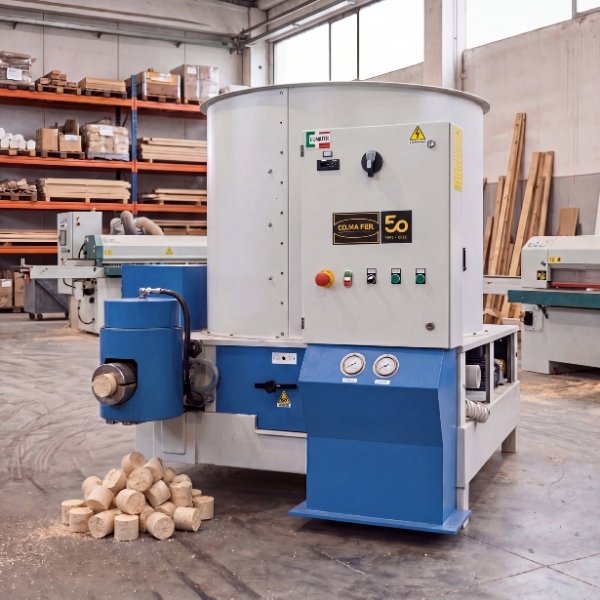
Up to 90% less volume to manage. Fewer containers, fewer shipments, and fewer emissions from the logistics of wood chips and waste.
Fluid recovery
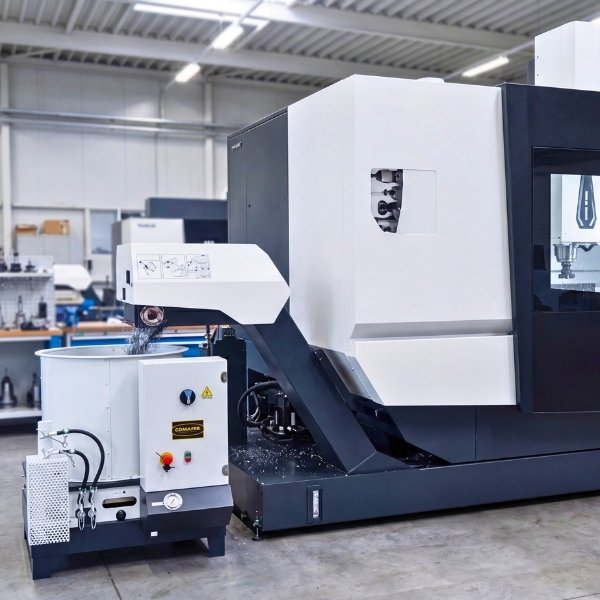
Coolant is extracted and recovered up to 90%. Compacted material reduces its hazard classification.
Material value
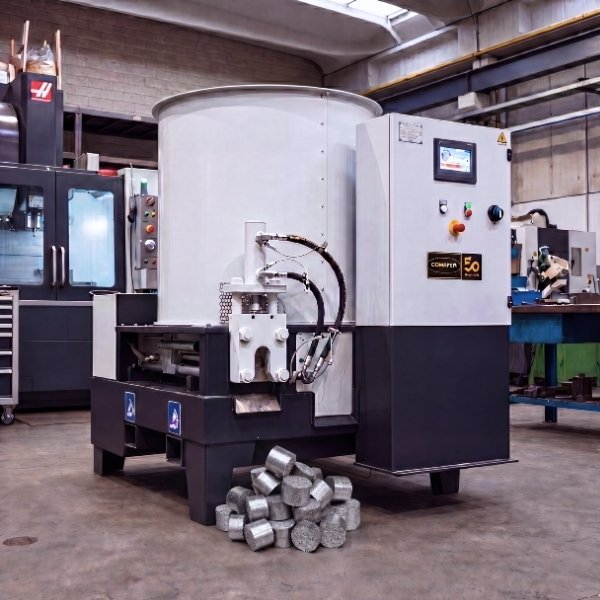
Briquettes have uniform density and reduced impurities. Collection price increases up to +50% compared to loose chips.
Social
Operational safety
Loose chips = risk of cuts, slips, fires (Al, Mg). Compaction eliminates accumulations in work areas.
Internal handling
−80% non-productive operations with carts and containers. Fewer interferences in logistics flows, lower accident risk.
Production layout
Redefined storage areas, eliminated accumulations, safety standard compliance integrated into ordinary workflow.
Governance
Traceability
Every phase is recordable: waste production → compaction → storage → collection. Data ready for ESG reporting.
Certifications
The process provides quantitative indicators (volumes, weights, recovered fluids) directly integrable into ISO 14001 systems.
Compliance
Correct EWC classification, documented management, verifiable output throughout the entire chain.
Process quality
Reliability
Operational continuity, consistent output over time
Sizing
Parameters consistent with actual waste volumes
Control
Per-shift data integrable into production system
Maintenance
Reduced downtime, predictable costs
ESG in summary
ESG
- −90% reduction in the volume of chips and scrap
- −70% recycling costs
- +90% coolant recovery
- +50% material value
ESG
- −80% internal handling
- Reduced operator risk
- Safer and more controlled production areas
ESG
- Complete traceability of the chip and scrap cycle
- Quantitative and verifiable ESG data
- Industrial waste regulatory compliance
Technical analysis of your production process
We evaluate together:
✔ Type and volume of chips and waste generated
✔ Fluid content in material
✔ Recovery potential and value of compacted material
✔ Estimated reduction in operating costs
Analyze how your company manages chips and scrap
Sustainability is a consequence of industrial efficiency. A well-designed and measurable process improves ESG metrics as a direct result, not as a communication goal.